

1. Scorecard
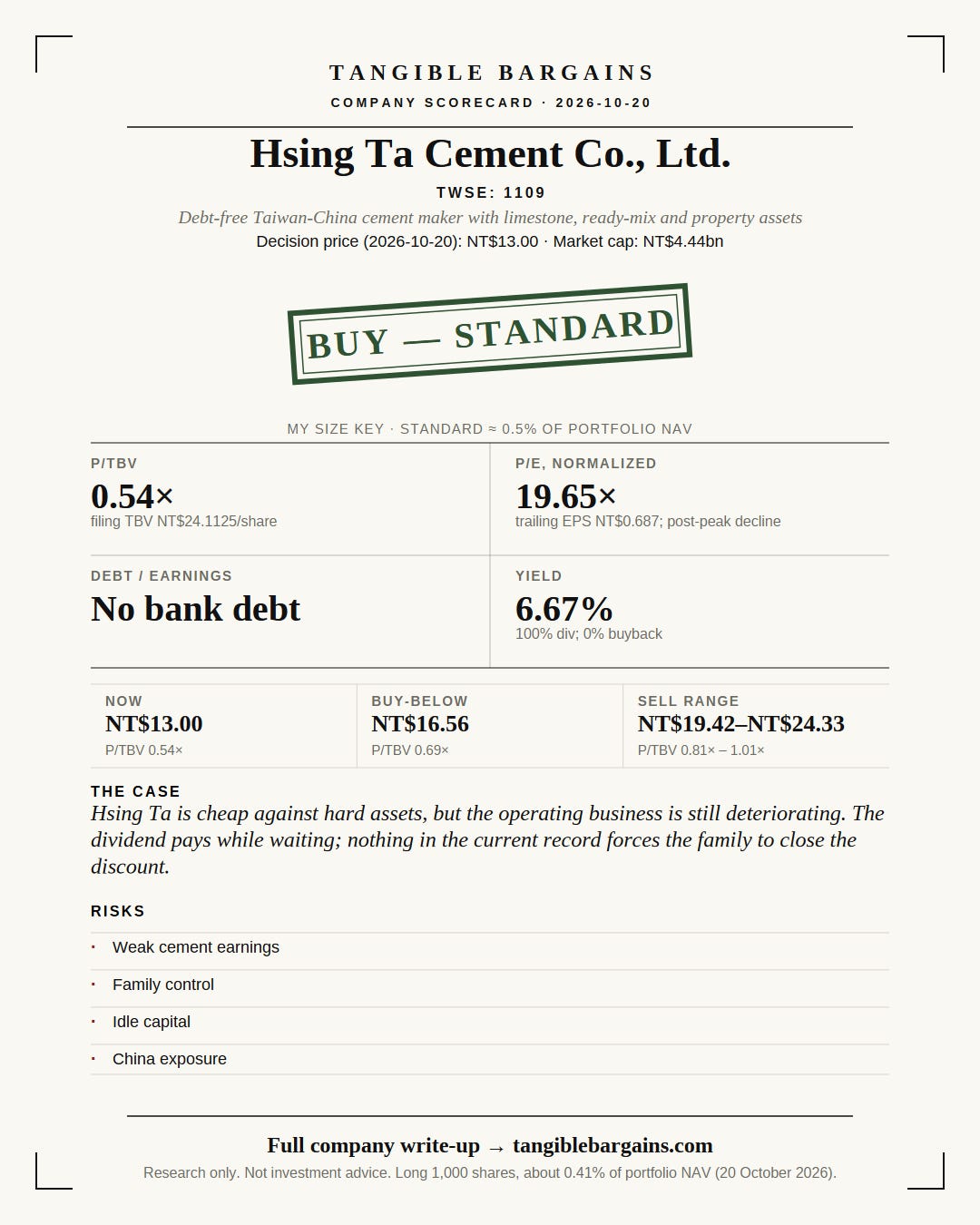
Verdict: BUY — STANDARD.
Actionable now: Yes — accumulate at ≤ NT$16.56 (price NT$13.00 as of 20 October 2026).
Position: Long 1,000 shares, about 0.41% of portfolio NAV (20 October 2026).
2. Argument
The short version
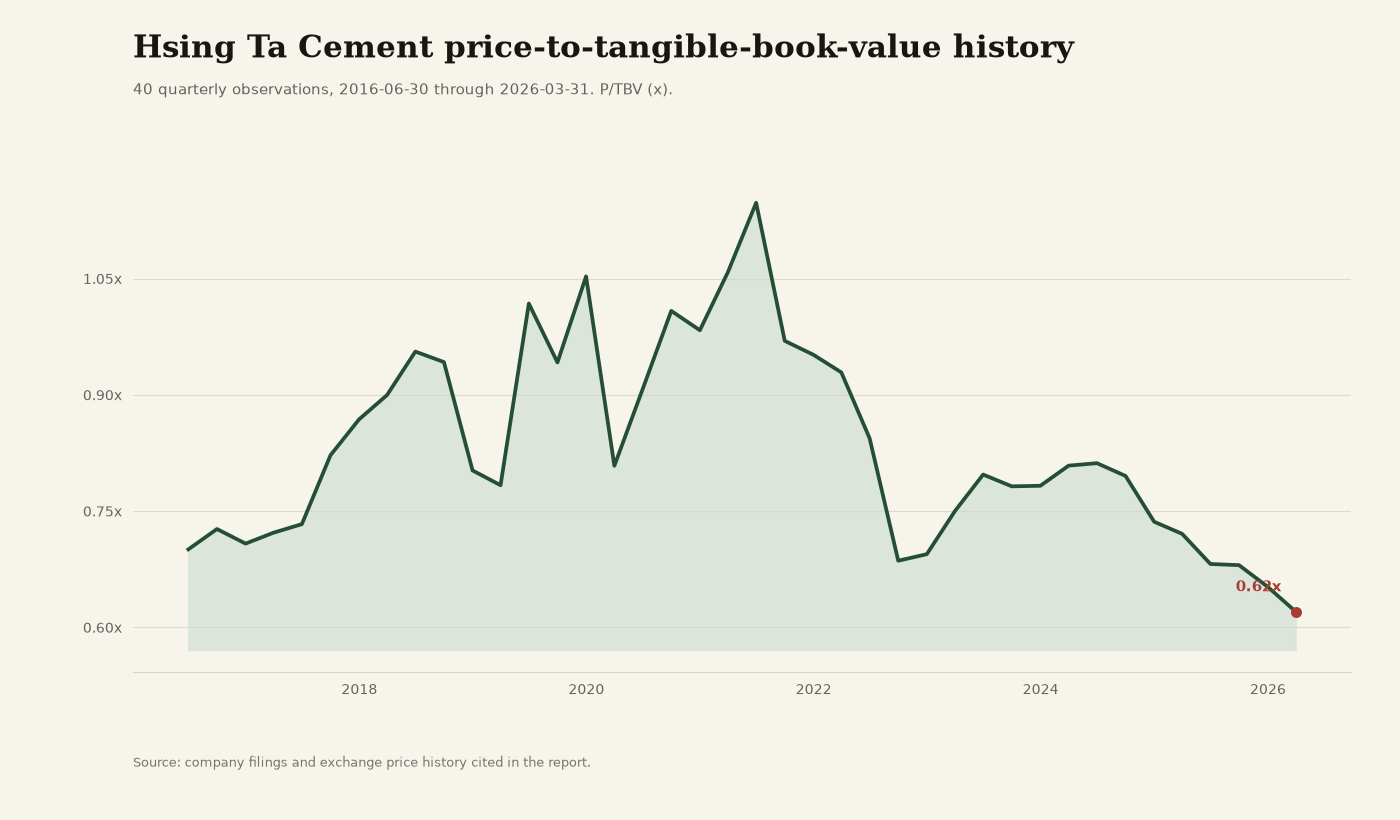
Hsing Ta Cement owns cement plants, a limestone quarry, Taiwanese land and financial assets. At NT$13.00 on 20 October 2026, the stock trades at 0.54× tangible book and has no bank debt. It is a standard-sized BUY because the balance sheet can carry a long wait.
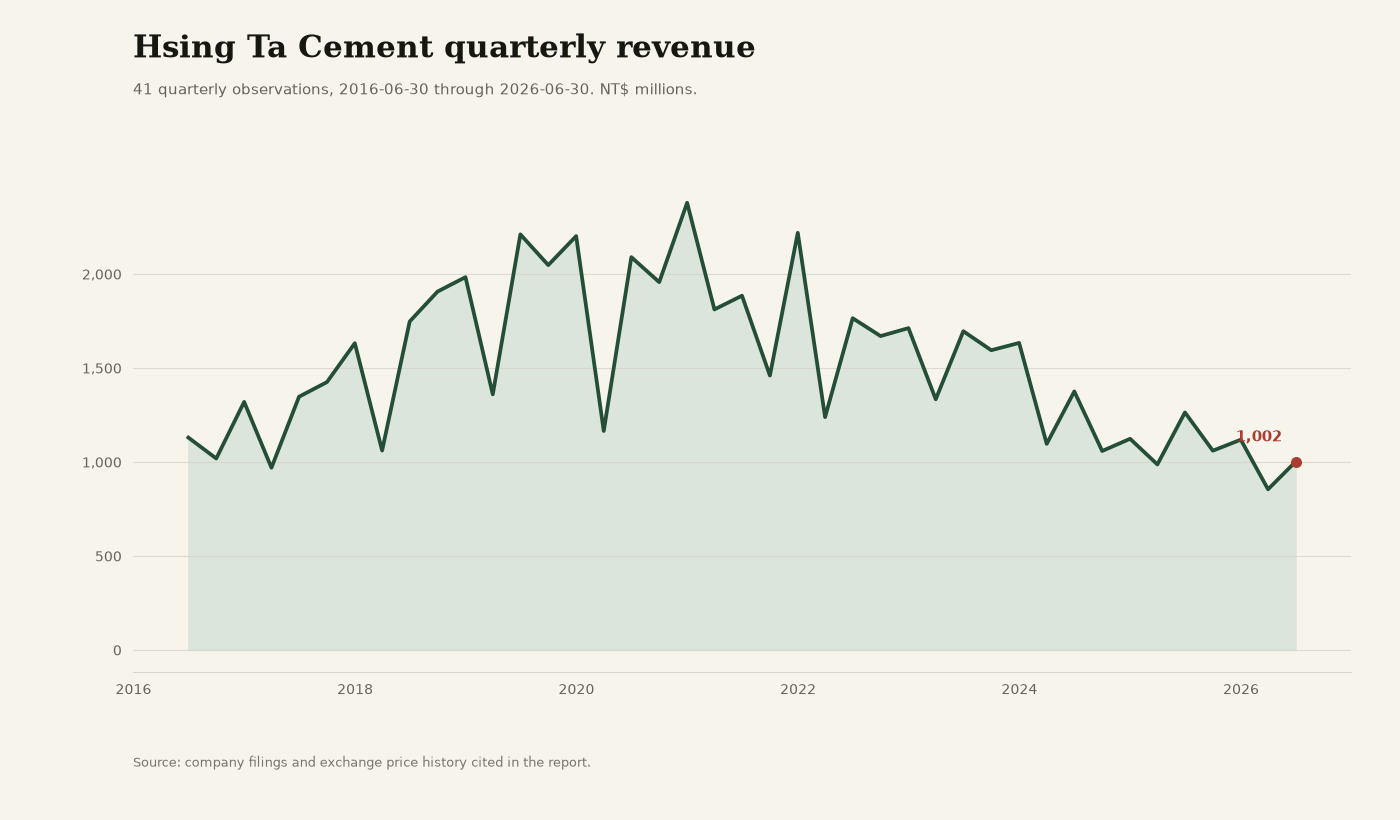
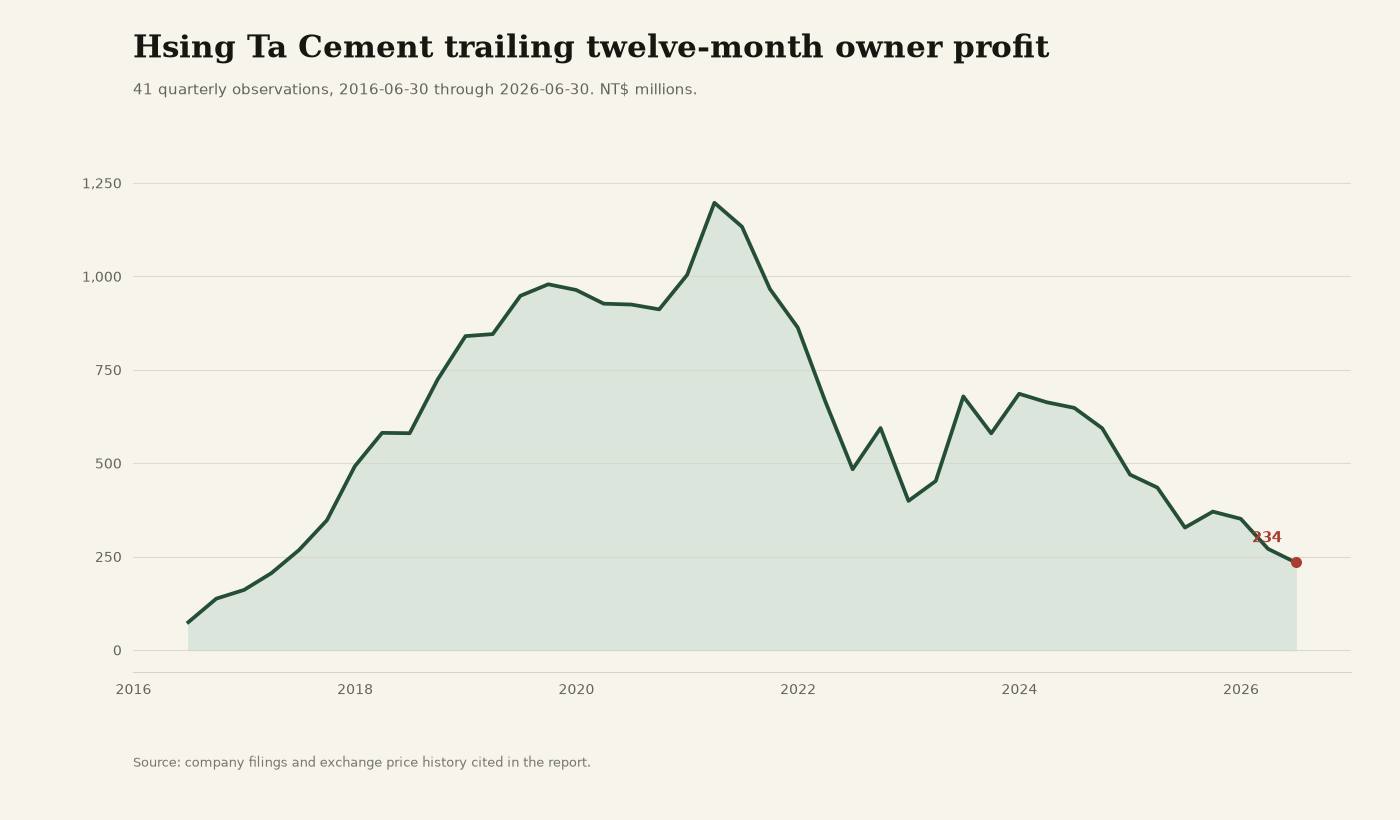
The wait is necessary. Revenue has fallen 41.6% over six years, gross margin has compressed from 34.4% to 9.1%, and the family has not repurchased shares at the trough. The discount is an asset-realization problem, not a simple solvency problem.
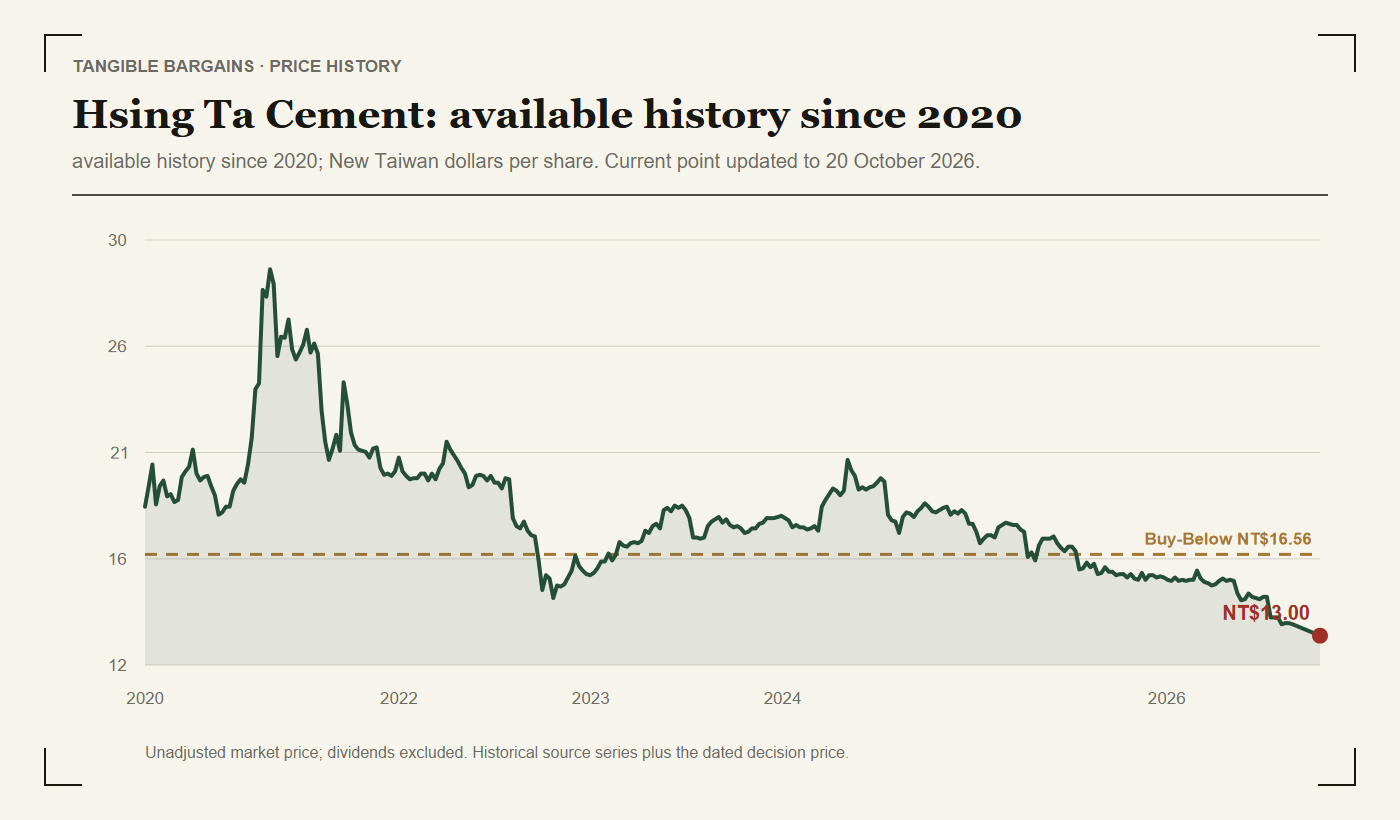
The available history since 2020 shows where the dated decision price sits. It is context for valuation, not evidence that a fallen share must rebound.
Assets, not momentum
Hsing Ta's operating business includes two Taiwanese plants, ready-mix operations and a Chinese cement subsidiary exposed to the mainland contraction. Cash and listed securities provide the cushion; land and investment property provide optionality. But underused property does not become cash until the board sells, exchanges or redeploys it.
Cash and securities were NT$4.93bn against NT$1.32bn of liabilities. Some liquidity sits behind subsidiary minorities and mainland remittance friction, and the investment-property uplift is management's estimate rather than an independent appraisal. The dividend yields 6.67%, but it has been cut twice in four years.
The ownership loop
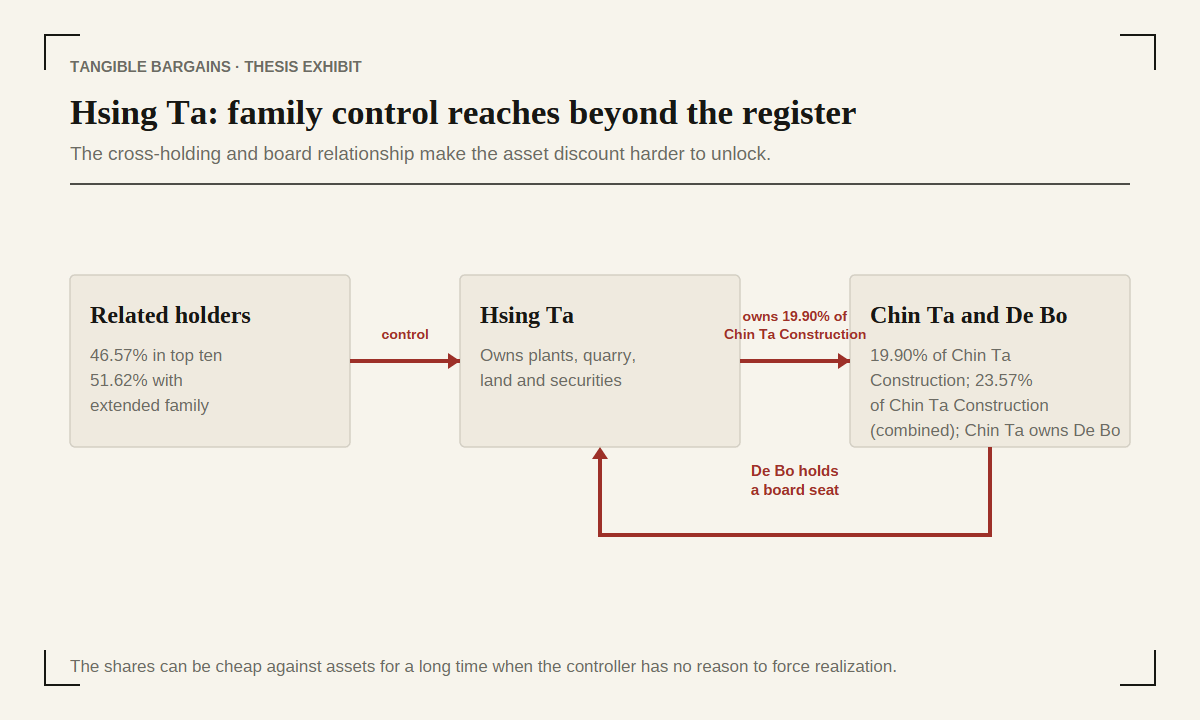
Seven related top-ten holders account for 46.57%; adding extended family reaches 51.62%. The 56.13% figure is the whole top-ten register, not family ownership.
Hsing Ta owns 19.90% of Chin Ta Construction, 23.57% on a combined basis; Chin Ta wholly owns De Bo, and De Bo holds a Hsing Ta board seat. That structure explains why a cheap balance sheet can stay cheap: no controller is forced to monetize assets or buy back shares for minorities.
What could unlock the discount
A buyback would be the clearest signal. A land exchange with the Taiwan government, a lower carbon-fee rate worth roughly NT$150m a year, or a sustained cement-margin recovery would also help. Until then, the dividend is the established cash route and the asset case remains exposed to China, family control and poor operating returns.
Sources and gaps
The report uses the FY2025 annual report, the June 2026 filing, company property disclosures and exchange price history. The half-year filing's footnotes on legal claims, commitments and related parties were not available at review; the latest confirmation came from the prior quarter. Investment-property values are management estimates.
3. Numbers that matter
Filing tangible book at 30 June 2026 was NT$24.1125 per share. The current price is NT$13.00, Buy-Below NT$16.56, and Sell Range NT$19.42–24.33. Cash and securities were NT$4.93bn against NT$1.32bn of liabilities, with no bank borrowings. Related holders were 46.57%, or 51.62% including extended family; 56.13% was the whole top-ten register. Hsing Ta owns 19.90% of Chin Ta, 23.57% combined; Chin Ta owns De Bo, which holds a Hsing Ta board seat.
Research only, not investment advice.